FAQs from Industry
1. What is the origin of CERT ID?

2. What does "'Non-GMO' Certified" mean?

3. Does CERT ID 'Non-GMO' certification mean that certified products are in compliance with national labeling laws?

4. How does CERT ID's certification process work?

5. What makes CERT ID an independent trustworthy third party?

6. If just one ingredient in a multi-ingredient product is CERT ID certified, can the package itself display the CERT ID seal?

7. What is the benefit of having 'Non-GMO' certification, instead of just GMO testing?

8. Could a product purchased in a grocery store contain genetically-engineered components, even though it was tested and claimed to show no GMO was present?

9. What exactly does 'seed to shelf' certification stand for?

10. Can a consumer be sure that organic food is non-GM? If not, why?

11. What is the level of reliability of CERT ID's 'Non-GMO' certification.

12. When a consumer sees the CERT ID seal on a product, what does this mean?

13. What is the result of certification? That is, what assurance does this give a consumer?

14. What is the cost of CERT ID 'Non-GMO' certification?

15. Certification is not the same as DNA testing. What does this mean to consumers, and why is it good? If DNA testing is not done then what kind of testing is?

16. Who are the testers and inspectors?

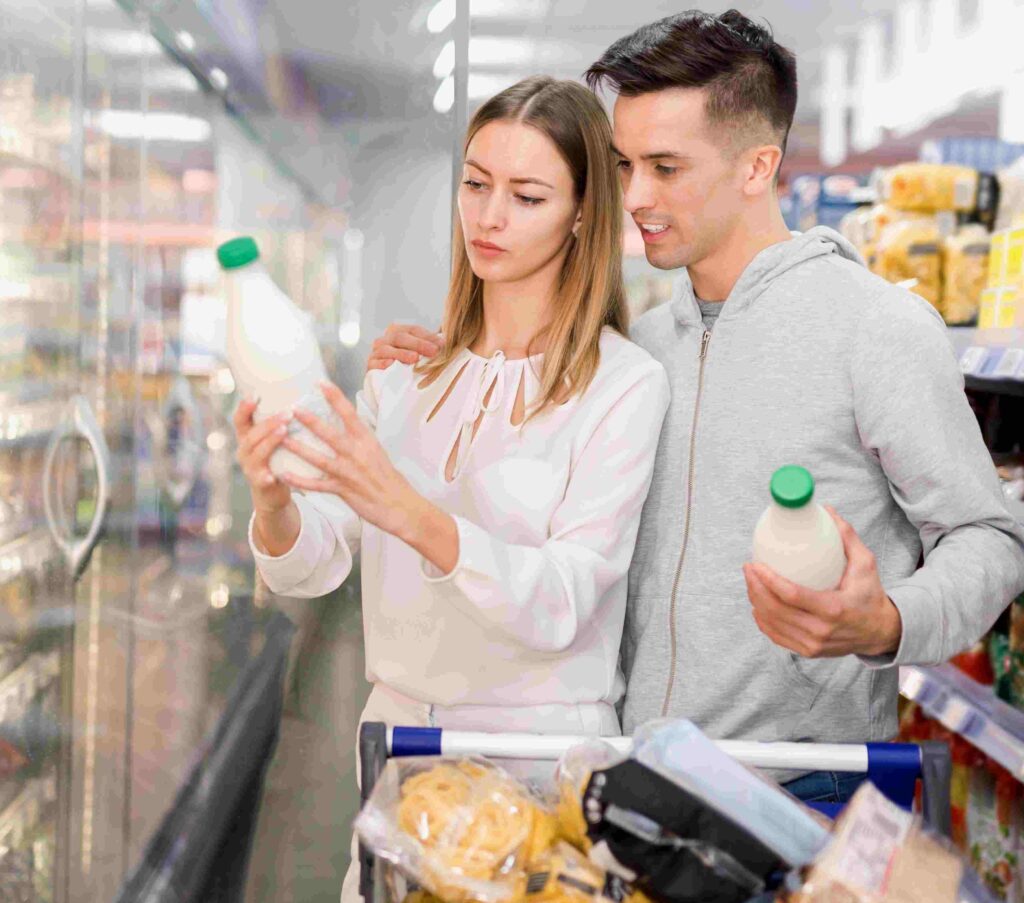
17. Does CERT ID also certify animal feed, or just human food? Can milk have a CERT ID seal?
1. What is the origin of CERT ID?
 In 1997, after being in business as the worlds first commercial GMO testing lab for more than a year, Genetic ID was approached by its existing clientele that wished to meet a requirement of their industry customers that they always be able to prove what the GMO content of any given product is.
As in the case of traditional soy sauce, for instance, the product goes through so many rigorous fermentation processes that no DNA is detectable by the PCR method be it natural or genetically modified DNA. Highly refined lecithin and soy and other vegetable oils can be equally devoid of any DNA.
Consumers, however, cannot accept a product as "untestable" and insist that a credible third party at least certify that the DNA-less product was produced from GMO-free stock that was tested before it would go into food production. At the time, Genetic IDs Clients felt that, as a PCR lab, the company had built up enough credibility that its reputation would also count as well when operating as a certification body.
After consideration, Genetic ID decided to fulfill their Client's demand and expand into certification. Under the leadership of an experienced professional with 20+ years in certification, Genetic IDs, as yet unnamed, certification standard was developed.
It did not receive the name CERT ID until early 1999, after the European retail industry requested a presentation of the "unnamed" program that had been created. In particular, the British Retail Consortium (BRC) was looking to help its members meet the strong demand of European consumers for non-GM products.
Led by British retailers who were soon joined by colleagues from the continental retail and food industries, the program was discussed, representatives of advocacy groups were invited for comment and the program was finalized. Today CERT ID operates in the global market as a neutral, independent certifier.
2. What does "'Non-GMO' Certified" mean?
 Any process guarantee (as opposed to a content guarantee) that a non-GM certification standard like CERT ID is can be only a matter of definition. CERT ID's defined level is called 'Non-GMO'.
Another reason to guarantee 'process' and not entirely 'content' is one of statistics. Testing every last bean in a shipment of soybeans would mean that there is nothing left to process afterwards! On top of that, the cost would be unrealistic.
At the request of its European clients and with support from some consumer advocacy groups, CERT IDs assurance level for full 'Non-GMO' certification was set at 0.1%. The process guarantee underwritten by CERT ID for a fully certified product is:
This product has been produced without genetically modified ingredients, processing aids, additives, flavorings, colorings, or other inputs.
Legislation in the member states of the European Union requires on the national level what positive claims in the case of non-GM labeling are to look like. In Germany, for instance, the two words "ohne Gentechnik" (without biotechnology) must be displayed additionally, if a manufacturer wishes to show the 'Non-GMO' Seal by CERT ID (or any other positive claim referring to "GM-free"). While similar legislation exists in France and in other countries, the UK and Eire permit positive claims by themselves, as long as they are truthful and demonstrable.
Therefore, production certified by CERT ID should be devoid of GMO content being that a manufacturer must target his production at 0%. The 0.1% threshold is a tribute paid to the possibility of any adventitious GMO presence that might occur during shipping, storage, handling and transportation.
Please refer in this regard immediately below to the response to Question 3 regarding the differences between 'Non-GMO' certification by CERT ID on the one hand and the EU Regulations that have been fully in force since 18 April 2004 dealing with GMO labeling and traceability on the other hand. In this context, the most important threshold is 0.9%.
3. Does CERT ID 'Non-GMO' certification mean that certified products are in compliance with national labeling laws?

The threshold of 0.1% in CERT ID's 'Non-GMO' certification must not be confused with the thresholds of 0.9% (and of 0.5%, respectively) in the EU Regulations regarding the Labeling and Traceability of GMOs [(EC) ) No. 1829/2003 and No. 1830/2003, of 22 September 2003]. The 0.1% threshold of CERT ID is about making a positive claim (such as "GM-free"), while in contrast to this the 0.9% threshold defines a legal consequence in case of an exceeding GMO content.
By sheer definition, CERT ID certification does not constitute compliance with any existing labeling laws, i.e. the current 0.9% labeling threshold in the EU. But in practice, CERT ID 'Non-GMO' certification lies well below all currently existing regulations with its tolerance threshold of 0.1% GMO content. Initial concerns by some industry members have proven baseless: The low threshold of 0.1% has proven feasible from seed to the food manufacturer at reasonable added cost since 1999.
4. How does CERT ID's certification process work?
 'Non-GMO' certification by CERT ID is a complex process involving many different steps that can extend over the span of an entire year. In addition, the way these steps are executed may vary greatly from industry to industry and from Client to Client. Details of the certification process "from seed to supper" can be studied on our page The Certification Process.
Steps towards CERT ID 'Non-GMO' Certification:
- Application
- Inspection: Assessment (PA)
- Setting up a Certification Plan
- Certification Committee: Evaluation
- Licensing: System certification
5. What makes CERT ID a trustworthy "third party"?

The reputation built by Genetic ID as a "global leader in genetic analysis of food and agricultural products" (ADM EM CAMPO, No. 11, May/June 2000, São Paulo, Brazil ) was sufficient to allow its clients to invite Genetic ID to create a 'Non-GMO' program. Genetic ID, Inc., parent of CERT ID, is independently owned: No shares are held or controlled, directly or indirectly, by members of the agricultural, food, retail or biotechnology industries nor by consumer advocacy organizations.
6. If just one ingredient in a multi-ingredient product is CERT ID certified, can the package itself display the CERT ID Seal?

Only full CERT ID certification of every ingredient will permit the producer of a consumer food item to display the 'Non-GMO' Seal of CERT ID. (And that service, of course, is what a manufacturer likes to provide the most!) However, there is also Ingredient Certification that assures an ingredient, say, lecithin, is produced exclusively from 'Non-GMO' raw material. In that case the ingredient supplier and the food manufacturer who uses it may claim 'Non-GMO' for that ingredient, but the CERT ID Seal may not be displayed on the finished product.
7. What is the benefit of having 'Non-GMO' certification, instead of just GMO testing?
 The potential problem with "just testing" is that there is no "waterproof" answer to the consumer question, "What assures that the analysis report of a laboratory quoted somewhere pertains to a sample that represents the product I have bought?" In the case of a credible and reputed supplier, his word that a certain lab report 'X' pertains to a certain bulk shipment 'Y' on the way from Brazil to France may be fully accepted by the industrial buyer in Europe. But that still leaves questions open as to what adventitious contamination may occur during shipping, storage and handling. And, extremely important, "just testing" means there is no traceability of IP systems.
With the coming into force of the fundamental EU Regulations (EC) No. 1829/2003 and No. 1830/2003 (both of 22 September 2003), an important shift of paradigms occurred on the EU level: The detection principle that had been used until now was replaced by the application principle. This means that any GMO labeling is not linked exclusively to the possibility of detection. Labeling is now always required if a food or feed is produced from a GMO, regardless of whether it can be detected in the finished product or not.
Already before these new Regulations, that are also implemented nationally on the level of the EU member states, were created GMO testing on the level of the food manufacturer had an important, but not unlimited, value: If someone wished, or wishes, to make a positive claim of his products as virtually "free of genetic engineering" he would then, and still must, prove that no genetically modified DNA is detectable but also that components such as enzymes, amino acids and vitamins were produced without the use of biotechnology. In this field analytical methods help little; this is where certification is indispensable.
To the consumer, CERT ID certification means "full" assurance of the 'non-GMO' status of the product that is bought in a store. To the manufacturer, it means that a possible gap of credibility is bridged in this regard. Testing by itself is only as valuable as the credibility the sampling process has to those who are to read a lab analysis report.
8. Could a product, purchased off the shelf of a grocery store, actually contain genetically engineered components, even though it was tested at the end of the processing stage, and the test showed it to be non-GMO? In other words, can a genetically engineered product/substance lose whatever characteristic it initially had that would identify it as being 'GMO'?

To be honest, Yes; In other words, a food product can lose whatever characteristic it initially had that would identify it as being GM or not GM. Because of food processing techniques and current testing technology, many food items can be made with GMO ingredients and not be identified as such. But with the criteria written into the CERT ID Standard and with the customized quality assurance measures imposed in each case this is extreamly unlikely for products CERT ID certified as 'Non-GMO' to actually contain GMOs. It is neither in the certification clients interest nor in that of CERT ID to be negligent. A food manufacturers quality assurance department will make sure that the measures in the production process certified by CERT ID will be adhered to.
'Non-GMO' certification does not begin at the food manufacturers production plant. It begins on the farm level and includes all stages in between, including loading, transportation and storage. All those links in the food chain are inspected, audited and tested as well. This makes it very difficult for any material with a GM status to slip through!

9. What exactly does seed to shelf certification stand for?
 Instead of seed to shelf, one also hears farm to fork", "dust to dinner or seed to supper. They all mean the same: In the CERT ID 'Non-GMO' certification program it describes the application of audits, inspection and state-of-the-art GMO testing from the seed supplier all the way to the food manufacturer of the consumer product, including the grower, the storage and handling, the shipping, the processing and the ingredient distribution, so that the paper trail of full traceability is never interrupted. This "paper trail" is documented by innumerable Transaction Certificates of Compliance (TCCs) that are issued by CERT ID. The TCC documents accompany each and every shipment of product that is certified as 'Non-GMO.'

10. Can a consumer be sure that organic food is non-GM? If not, why?
 No, unfortunately not always. By definition of organic standards, all food items thus certified should be "GMO-free," but the additional challenges surrounding the entry of genetic engineering in the food production processes are not covered by the measures of any organic certification program in place. Cross contamination in corn(maize) fields, adventitious contamination during transportation or elsewhere and etc. is not addressed in a way appropriate to GMOs.

11. What is the level of reliability of CERT IDs 'Non-GMO' certification.
 It is very high. Experience has shown more and more that the rigidity of the CERT ID standard and its practical implementation is very successful. No certified product has ever tested positive for GMOs.

12. When a consumer sees the CERT ID Seal on a product, what does this mean?
 It signals to the shopper that the product she/he is looking at is certified as 'Non-GMO', meaning it contains less than 0.1% GMOs. It also means that the manufacturer/producer of this particular product is licensed to use the Seal to indicate that CERT ID has fully certified this particular product against the CERT ID 'Non-GMO' standard. The production facility is system-certified and the product is product-certified. Because of that, there is full traceability according to the CERT ID Standard.
13. What is the result of certification? That is, what assurance does this give a consumer?
 Formally, this means that the maximum percentage of each GMO present in the product can be 0.1%. However, in practice it usually means that there is absolutely no GMO content whatsoever, beginning from the agricultural level. This is due to the fact that in certified products all potential GMO-containing components are certified, i.e., tested and inspected, from their source of origin.

14. What is the cost of CERT ID 'Non-GMO' certification?

Because of great differences between production facilities, even in the same industry, the cost of certification can only be calculated on a case-by-case basis. A reliable cost estimate can be issued to prospective clients interested in becoming certified. This is possible after CERT ID receives a System Assessment Worksheet form filled in and submitted. This form is available electronically from any CERT ID office.
Generally, CERT ID clients feel that certification costs are fair and fully warrant the accomplished result, be it added value and better marketability of the certified product, or achieving early compliance with legislation which has become rather strict.

15. "Non-GM" Certification is not the same as DNA testing. What does this mean for manufacturers and consumers, and why is it good? If DNA testing is not done then what kind of testing is?
 CERT ID certification of production processes does indeed involve DNA testing but it also involves much more than that.
The testing done on the input level of a soybean uses rapid strip tests that detect certain proteins. These rapid strip tests are employed before the crushing plant's gates. Once this cargo is pre-tested it is unloaded into a buffer stock. A representative sample of this buffer stock is sent for rigid PCR testing. Only PCR-tested raw material is used in the plant.
PCR testing of DNA is the industry standard and in many countries PCR is the only accepted method (see also EU Technical Working Group on GMO Testing, Lisbon meeting, October 5, 1999)

16. Who are the testers and inspectors?

The testers are labs that meet the quality criteria set forth in the CERT ID standard. This does not necessarily mean it has to be a Genetic ID lab, but all members of Genetic ID's Global Laboratory Alliance® operate according to the same analytical methods as the labs of Genetic ID who, in turn, are accredited according to DIN EN ISO 17025. (ISO Certification Guide 65 forbids that a certain lab or method be specified exclusively.)
The inspectors can either be CERT ID employees or professional members of the inspection industry specially trained by CERT ID on location for the purpose of rendering this kind of support to the program.

17. Does CERT ID also certify animal feed, or just human food? Can milk have a CERT ID seal?
 A vast amount of certification is done on animal feed. In fact, by volume, animal feed accounts for the largest part of certified products. Food products intended for human consumption make up the largest number of individual products.
CERT ID certifies animal feed the same way as 'Non-GMO' as it does food products. As far as we know, there is currently no legislation enacted worldwide requiring that animal products be labeled as "produced with the use of biotechnology". Likewise, the most recent EU rules as stipulated in the Regulations (EC) ) No. 1829/2003 and No. 1830/2003 (both of 22 September 2003) are no exception to this.
Since early 2004 voices have been raised in political circles as well as among advocacy groups demanding GMO labeling also for animal products, if applicable. After all, as early as the beginning of 2001 studies were conducted showing that plant DNA can be detected in cow's milk up until the point of pasteurization.
This is possibly the enough reason for producers of poultry, dairy products etc. to have their products now certified as 'Non-GMO' by CERT ID as well. This, however, is only possible if the manufacturers of the animal feed used have also obtained the 'Non-GMO' Seal from CERT ID for their products.
Glossary for Industry
|